


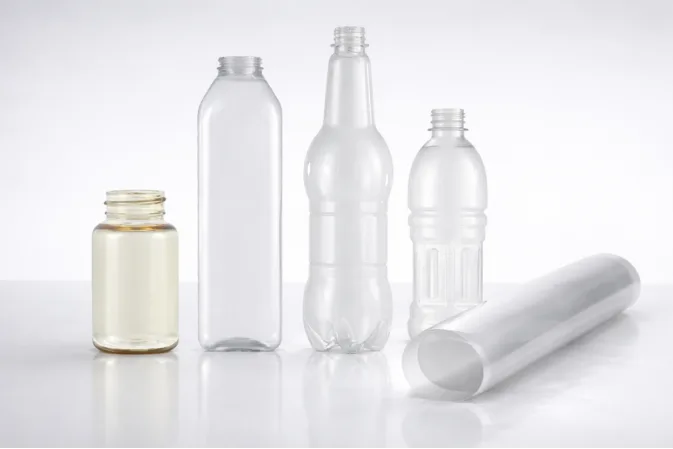
As packaging regulations tighten and consumer expectations evolve, material innovation is becoming one of the defining challenges for the packaging industry. Brands are increasingly looking beyond conventional plastics toward materials that can simultaneously reduce carbon emissions, improve product performance, and support circular economy goals.
Among the emerging next-generation materials, PEF resin (Polyethylene Furanoate) has attracted significant attention. Produced from renewable plant-based feedstocks, PEF combines a substantially lower fossil-carbon footprint with outstanding gas-barrier performance, making it one of the most promising alternatives to fossil-based materials for packaging.
What Is PEF Resin (Polyethylene Furanoate)?
PEF (Polyethylene Furanoate) is synthesized from renewable, furan-based building blocks. Its unique chemical structure is poly (ethylene 2,5-furandicarboxylate), which is comprised of:
- FDCA (2,5-furandicarboxylic acid): Extracted and refined from biomass sugars.
- Bio-EG (Bio-ethylene glycol): Sourced entirely from renewable carbon origins.
As a furan-based polymer, PEF resin features a rigid molecular structure enabled by the furan ring. This architecture delivers exceptional oxygen and CO₂ barrier performance along with enhanced thermal resistance, making it particularly well-suited for demanding high barrier packaging applications.
Why the Packaging Industry Needs Alternatives to Fossil-based Materials
In today’s global consumer goods and industrial supply chains, packaging has evolved far beyond merely a vessel for containing products. It has become a strategic baseline where brand sustainability, supply chain efficiency, and regulatory compliance intersect. As industries globally re-evaluate their reliance on fossil fuels and accelerate toward a circular economy, conventional packaging materials are confronting an unprecedented, systemic disruption.
Decarbonization and Policy Drivers
The transition away from legacy materials is no longer voluntary; it is being aggressively mandated by a shifting global regulatory environment. Groundbreaking Frameworks like the EU’s Packaging and Packaging Waste Regulation (PPWR) are introducing strict mandates on post-consumer recycled content and design-for-recycling principles.
Concurrently, rising carbon taxes and net-zero commitments from multinational conglomerates are making fossil-based, carbon-heavy supply chains financially and reputationally untenable. Brands urgently require low-carbon, bio-based material alternatives that inherently mitigate compliance risks while establishing a distinct, future-proof market advantage.
The Narrowing Performance Horizon of Conventional Polymers
Simultaneously, the functional demands placed on modern packaging have reached a historic peak. Extended global supply chains, complex logistics, and shifting consumer expectations require materials to deliver exceptional barrier properties, rigorous mechanical strength, and enhanced thermal stability. Under the current fossil-based paradigm, however, conventional lightweight polymers have hit a physical performance ceiling.
To achieve high barrier performance, traditional systems frequently rely on complex multi-layer structures—combining co-extrusions, functional coatings, or blended polymers. This structural complexity fundamentally breaks the backend circular economy, rendering the packaging virtually impossible to sort and mechanically recycle. Consequently, performance optimization and genuine sustainability have become irreconcilable trade-offs within the legacy material framework.
The PEF Resin Advantage: Responding to the Future of Packaging
This dual pressure: the relentless push for total decarbonization paired with the uncompromising demand for higher performance, has created a critical void that conventional materials cannot fill. The packaging industry requires a structural paradigm shift. It directly responds to the overarching thesis of modern packaging by simultaneously meeting three critical demands:
- Sustainability: Being 100% bio-based, it radically lowers the carbon footprint and aligns with evolving market dynamics.
- Safety: Suitable for food-contact applications and designed to support stringent food packaging requirements.
- High Performance: It inherently acts as a high barrier film, eliminating the need for complex, non-recyclable multi-layering.
How Leaf Bio Produces FDCA and PEF Resin from Biomass
While the theoretical benefits of PEF plastic are well-documented, its commercial viability hinges entirely on monomer purity. Leaf Bio has pioneered a proprietary, streamlined bio-based chemical pathway that converts renewable plant resources into high-performance polymers.
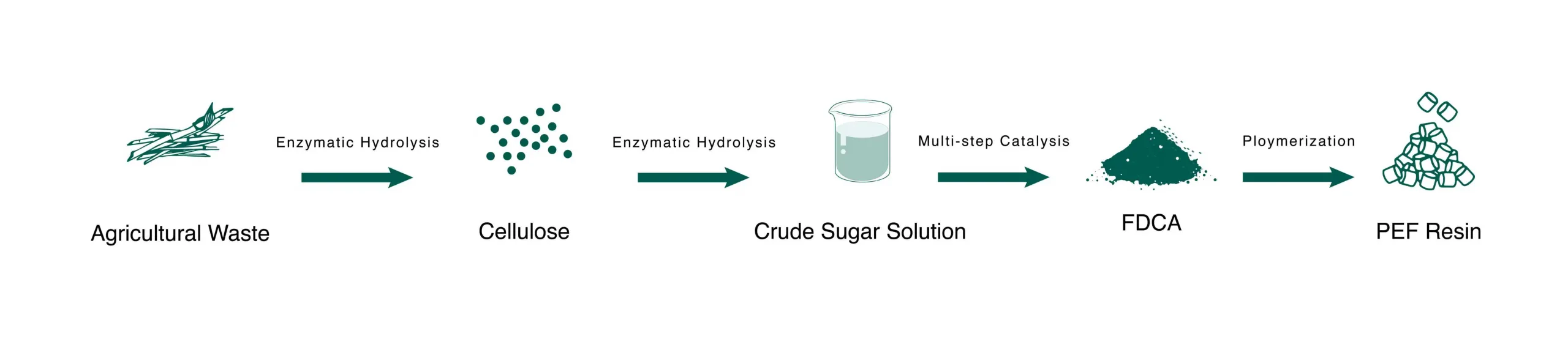
To achieve this, the transformation is structured into a precise, three-stage catalytic process:
- Phase 1 | Biomass Depolymerization: Renewable plant resources, like agricultural residues and plant-based feedstocks, are efficiently broken down to extract high-yield natural sugars.
- Phase 2 | Catalytic Conversion: Through advanced catalytic reactions, these extracted sugars are converted into FDCA (2,5-furandicarboxylic acid),the fundamental aromatic building block of the furan polymer.
- Phase 3 | Polycondensation: The FDCA is subsequently polymerized with bio-based ethylene glycol (Bio-EG) to synthesize the final, high-performance PEF resin.
Achieving 99.99% polymer-grade FDCA purity enables stable polymerization and supports the production of highly transparent PEF resin suitable for premium packaging applications. This level of purity provides a strong foundation for consistent product quality and commercial-scale manufacturing.
Why PEF Resin Is the Future of High-Barrier Packaging
Rather than optimizing only one aspect of performance, future packaging materials are expected to deliver a balanced combination of functionality, and environmental responsibility. PEF reflects this shift by combining a renewable, plant-derived origin with outstanding barrier performance, offering a material solution that aligns with the packaging industry’s growing demand for sustainability and high-performance functionality.
Fundamentally, the revolutionary value of PEF resin lies in its intrinsic material properties, which successfully bridge the gap between ecological responsibility and industrial utility. PEF simultaneously satisfies the escalating global demands for sustainability, chemical safety, and high performance in modern packaging.
What High Barrier Packaging Means for Food Applications
Beyond containing and transporting products, packaging is increasingly required to protect food quality, support food safety, and contribute to more sustainable food systems. These evolving expectations are driving demand for materials that combine outstanding barrier performance with renewable origins—an area where PEF offers significant potential.
Food Safety
From the perspective of food and beverage preservation, high barrier packaging is the first line of defense.
Sourced from renewable plant-based feedstocks, PEF provides a bio-based material platform designed for food-contact applications, maintaining chemical stability for long-term product protection. Combining its excellent barrier performance with food-contact compatibility, PEF enables long-term protection while supporting the industry’s transition toward renewable material solutions.
Extending Product Shelf Life
Effective barrier materials help minimize the transmission of oxygen, moisture, and other external factors. High barrier materials help preserve flavor, aroma, texture, and nutritional value over time. This extended protection allows products to remain fresh throughout transportation, retail display, and consumer storage, reducing spoilage while improving supply chain efficiency.
The Material Science Angle: Decoding the Furan Ring
PEF’s chemical structure incorporates a rigid furan ring. Unlike traditional materials, the rigidity of the furan ring significantly restricts molecular mobility. This suppressed chain mobility makes the diffusion of gases through PEF films significantly more difficult. This dense molecular packing reduces the free volume available for gas transport, making it more difficult for oxygen and carbon dioxide molecules to diffuse through the polymer.
Scientifically, amorphous PEF is approximately 11 times less permeable to oxygen and up to 19 times less permeable to carbon dioxide than PET. When processed into a high barrier film, this rigid molecular arrangement forms an impenetrable structure for gas molecules.
This extraordinary gas-barrier profile makes PEF the definitive answer for the most demanding packaging scenarios that standard plastics fail to sustain. It provides a quantum leap for applications requiring extreme airtightness and shelf-life preservation, such as carbonated soft drinks that quickly lose carbonation, oxygen-sensitive beers, and moisture-critical electronics or pharmaceuticals.
In these high-stakes segments, PEF eliminates the need for expensive chemical coatings or complex multi-layer laminates, proving that its molecular advantages translate directly into ultimate commercial-grade protection.
High Barrier Packaging Applications (Leaf Bio’s ECOPEF® in Action)
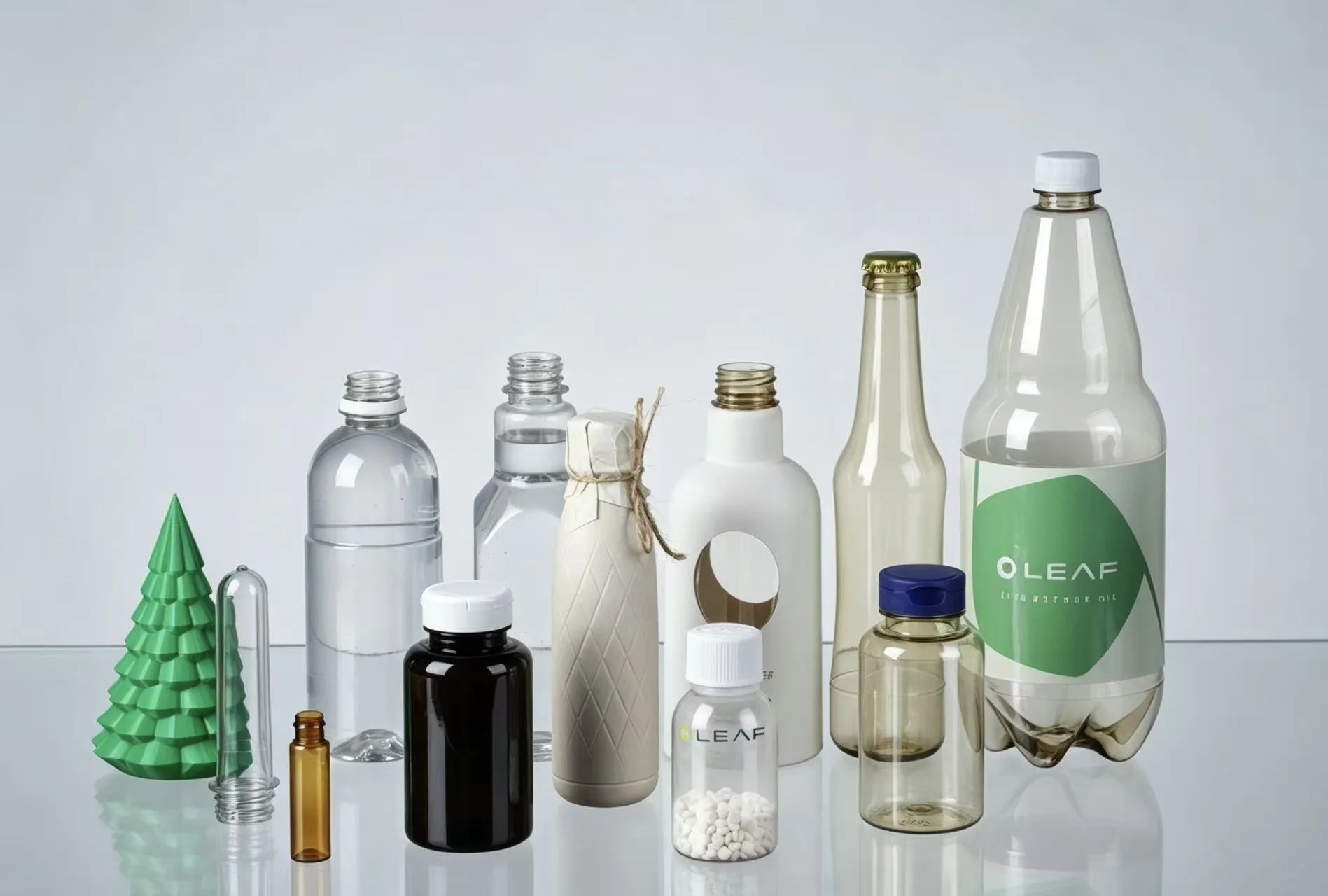
The value of advanced materials is ultimately measured by the products they enable. Building on the intrinsic performance of PEF, ECOPEF® translates plant-based polymer innovation into practical packaging solutions for applications where product protection is critical. Designed for real-world applications, ECOPEF® brings together renewable materials and high barrier performance to meet the evolving demands of modern packaging.
Food & Beverage Packaging
In the food and beverage sector, maintaining product quality and extending shelf life are key priorities. PEF-based packaging offers outstanding gas barrier performance, making it particularly suitable for carbonated soft drinks, premium coffee, sparkling water, and sensitive dairy beverages. Its enhanced CO₂ barrier (up to 19× higher than PET) helps preserve carbonation and freshness, while its superior oxygen barrier protects oxygen-sensitive products such as juices, functional drinks, and prepared foods from oxidation.
Beyond beverages, PEF films and containers provide high-barrier protection for food applications, including fresh produce and baked goods. By limiting oxygen and moisture transmission, PEF helps maintain flavor, texture, and product quality throughout storage while supporting lightweight and recyclable packaging solutions.
Aroma-Sensitive and Specialty Packaging
For products whose value lies in their fragrance, formulation, or sensory experience, packaging plays an essential role in preserving what consumers ultimately perceive. PEF helps retain delicate fragrances, protect active formulations, and maintain the stability of sensitive liquid products over time. These characteristics make it an ideal material platform for beauty, fragrance, and specialty packaging applications where product quality depends on more than appearance alone.
Why PEF Represents the Future of Packaging
Polyethylene furanoate (PEF) resin represents a major step forward in sustainable materials science. Moving towards 2026 and beyond, industry insights make it clear that the transition to PEF is foundational.
Driven by international standards like the EU Packaging Regulation, top-tier brands are aggressively updating their Brand Sustainability Goals. PEF allows these brands to deploy a mono-material solution that offers exceptional barrier performance while remaining fully compatible with existing mechanical recycling streams.
Beyond mere performance, PEF plastic enables a scalable transition toward low-carbon, plant-based material systems that permanently reduce dependence on fossil resources. To explore how PEF-based solutions can be applied to elevate your high barrier packaging, connect with Leaf Bio for technical collaboration and ECOPEF® product development support.