


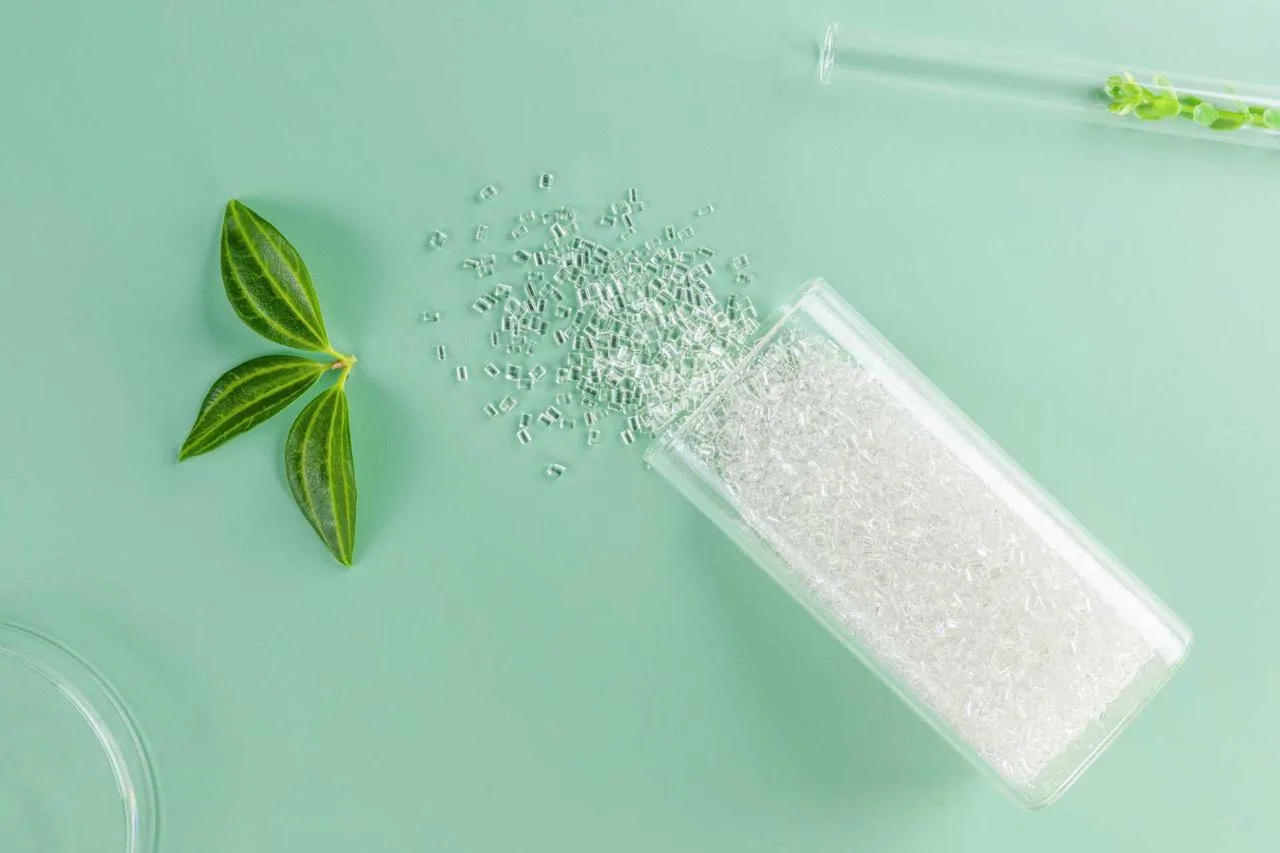
As industries explore renewable material solutions, understanding the science behind emerging polymers is becoming increasingly important. In this rapidly evolving landscape, Polyethylene Furanoate (PEF) has rapidly moved from specialized laboratories into the center of the industrial spotlight. This innovative bio-based resin is sparking widespread excitement for its potential to redefine the future of responsible packaging.
What is Polyethylene Furanoate?
PEF (Polyethylene Furanoate), scientifically known as poly(ethylene 2,5-furandicarboxylate), is a bio-based material made from renewable building blocks. It is a type of polymer created through the combination of 2,5-furandicarboxylic acid (FDCA) and ethylene glycol (EG), which are used to form the polymer chain structure.
The name “polyethylene furanoate” reflects its chemical composition: “polyethylene” refers to the ethylene glycol component, while “furanoate” comes from the furan-based FDCA structure. The presence of the furan ring is a defining feature of PEF, giving the polymer its unique molecular structure within the polyester family.
At the molecular level, PEF has the chemical formula (C₈H₆O₅)ₙ and belongs to the family of furan-based polyesters. Unlike conventional petroleum-derived polymers, PEF is classified as a bio-based polyester because its monomers can be produced from renewable biomass resources. Its polymer structure consists of repeating units connected through ester bonds, forming a durable thermoplastic material suitable for further processing into resin forms.
How Is PEF Made?
The production of PEF represents a sophisticated application of industrial biotechnology and polymer chemistry. The process begins with the harvesting of renewable biomass. The primary raw materials are plant-derived sugars, which can be sourced from agricultural feedstocks.
Through advanced catalytic or biological conversion processes, these plant-derived sugars are dehydrated and oxidized to produce the core monomer: 2,5-Furandicarboxylic Acid, commonly known as FDCA. FDCA is the defining structural unit of PEF and is recognized as a crucial building block in the bio-based chemicals sector.
Once high-purity FDCA is obtained, it reacts with another monomer, Monoethylene Glycol (MEG). While MEG has historically been derived from petrochemical sources, the industry is increasingly utilizing bio-MEG derived from plant sources to create a fully bio-based polymer.
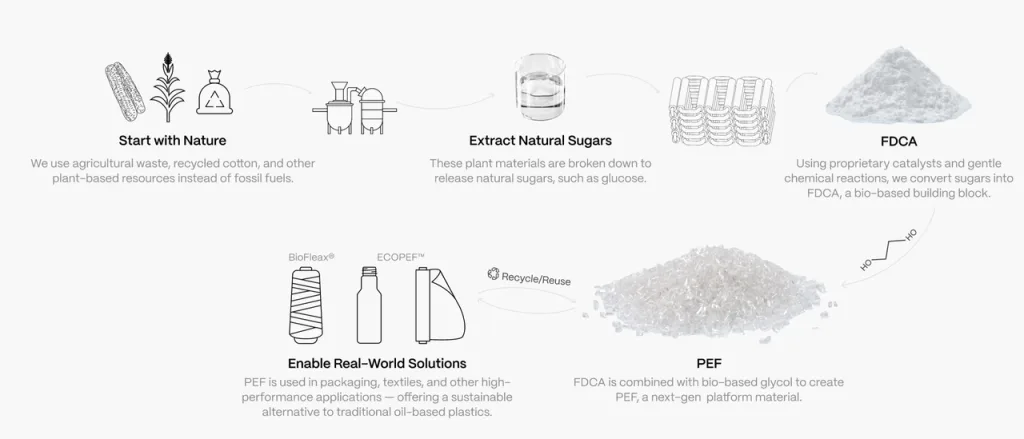
The formation of the PEF resin occurs via polycondensation. During this chemical reaction, FDCA and MEG are heated under specific pressure conditions, typically with the assistance of catalysts. The monomers link together, releasing water or methanol as a byproduct, to form long polymer chains. The resulting molten polymer is then cooled and cut into pellets, creating the final packaging resin ready for injection molding, stretch blow molding, or extrusion. This controlled polycondensation ensures that the molecular weight and intrinsic viscosity of the PEF resin meet the strict requirements of packaging manufacturers.
Key Advantages of PEF
PEF combines renewable material origins with advanced polymer properties. Its unique molecular structure gives it several important characteristics that distinguish it within the bio-based polyester family.
Exceptional Barrier Performance
The exceptional barrier performance of PEF comes primarily from the rigid furan ring structure introduced by FDCA. This structure reduces molecular flexibility and creates a more compact polymer arrangement, which limits the movement of small gas molecules through the material, improving the material’s ability to control gas permeability.
As a result, PEF demonstrates strong barrier properties against oxygen and carbon dioxide, helping protect sensitive materials from external environmental factors.
These barrier characteristics make PEF a high-performance material for applications where maintaining material protection and stability is important.
Renewable and Bio-Based Material Source
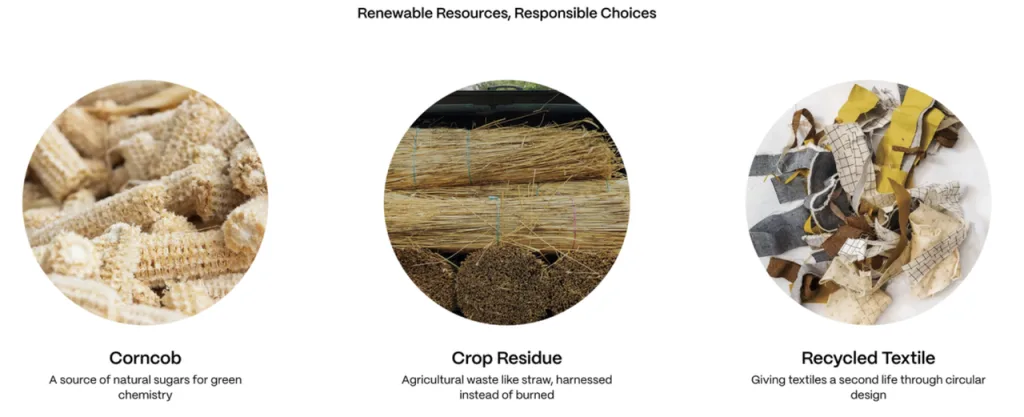
PEF is developed from renewable carbon sources rather than relying on fossil-based raw materials.
The production pathway begins with biomass-derived sugars, which are converted into FDCA and then incorporated into the polymer structure. This approach allows PEF to utilize carbon captured by plants during growth and supports the development of renewable material systems.
The use of renewable feedstocks is an important aspect of bio-based polymer development, providing an alternative approach for creating advanced materials from biological resources.
For companies and industries exploring lower-carbon material solutions, bio-based polymers such as PEF represent an important direction in sustainable material innovation.
Strong Mechanical Properties and Thermal Resistance
Beyond its barrier characteristics, PEF exhibits exceptional mechanical strength and thermal stability driven directly by its polymer backbone architecture.
High Mechanical Modulus and Structural Rigidity: The ring structure within the polymer chain provides high inherent stiffness and tensile strength. This allows PEF to maintain high structural integrity and top-load resistance, enabling packaging designers to optimize wall thickness and achieve material lightweighting without sacrificing strength.
Thermal Resistance ($$T_g \approx 86^\circ\text{C$$): PEF features a glass transition temperature ($$T_$$) of approximately $$86^\circ\text{C$$. This high $$T_$$ ensures that the polymer resists thermal deformation under elevated processing and storage conditions, giving PEF resin high dimensional stability during hot-fill processes, pasteurization, or warm-climate transport.
Designed for Circular Packaging Systems
The transition toward a circular economy requires materials that not only originate from renewable sources but also fit into sustainable end-of-life frameworks. PEF is designed as a recyclable material and has attracted interest in its compatibility with existing recycling approaches. Its polyester-based chemistry provides a foundation for integration into future circular material systems.
Currently, PEF is being evaluated for its compatibility with existing sorting and recycling infrastructure. Extensive industry testing indicates that it can contribute to future recycling systems as production scales. While establishing a completely separate recycling stream or integrating it into current PET streams requires careful lifecycle management, the fundamental polymer chemistry of PEF suggests high recyclability potential, making it a viable candidate for long-term circular packaging solutions.
Why Is PEF the Future of High-Barrier Packaging Material?
The future of sustainable materials depends on achieving both environmental responsibility and high technical performance. Renewable materials need to provide more than bio-based origins—they must also deliver the functional properties required by modern industries.
PEF represents this next generation of material development by combining renewable feedstocks with advanced polymer chemistry. Its high barrier performance, thermal stability, and mechanical strength come from its unique molecular structure rather than additional functional coatings or complex modifications.
As demand grows for high-performance sustainable materials, PEF continues to attract attention as an important platform polymer for future high-barrier material solutions.
The Role of the Furan Ring Structure
The distinctive properties of PEF are closely related to the presence of the furan ring within its polymer backbone.
The furan ring is a five-membered aromatic structure containing oxygen atoms. Compared with more flexible polymer structures, this ring creates greater rigidity within the molecular chain.
This rigidity reduces the movement of polymer chains and decreases the microscopic free space between them. As a result, gas molecules such as oxygen and carbon dioxide simply cannot diffuse through the polymer structure. This precise structural characteristic is what elevates PEF from a standard bio-based material to an elite high-barrier polymer.
PEF Resin as a Next-Generation Packaging Material
As a next-generation material, PEF resin combines renewable origins with advanced polymer performance and represents a new generation of bio-based polyester materials designed for high-performance applications.
Its unique molecular structure, strong barrier properties, and renewable feedstock foundation demonstrate how polymer innovation can balance functionality with sustainability. As research and production technologies continue to advance, PEF is becoming an important example of how bio-based materials can support the development of more renewable and circular material systems.
At Leaf Bio, we are exploring the potential of PEF through our ECOPEF, bringing material innovation from molecular design into practical packaging applications. By leveraging the unique structure and performance advantages of PEF, ECOPEF is designed to deliver high-performance solutions while supporting the development of more renewable and circular material systems.