


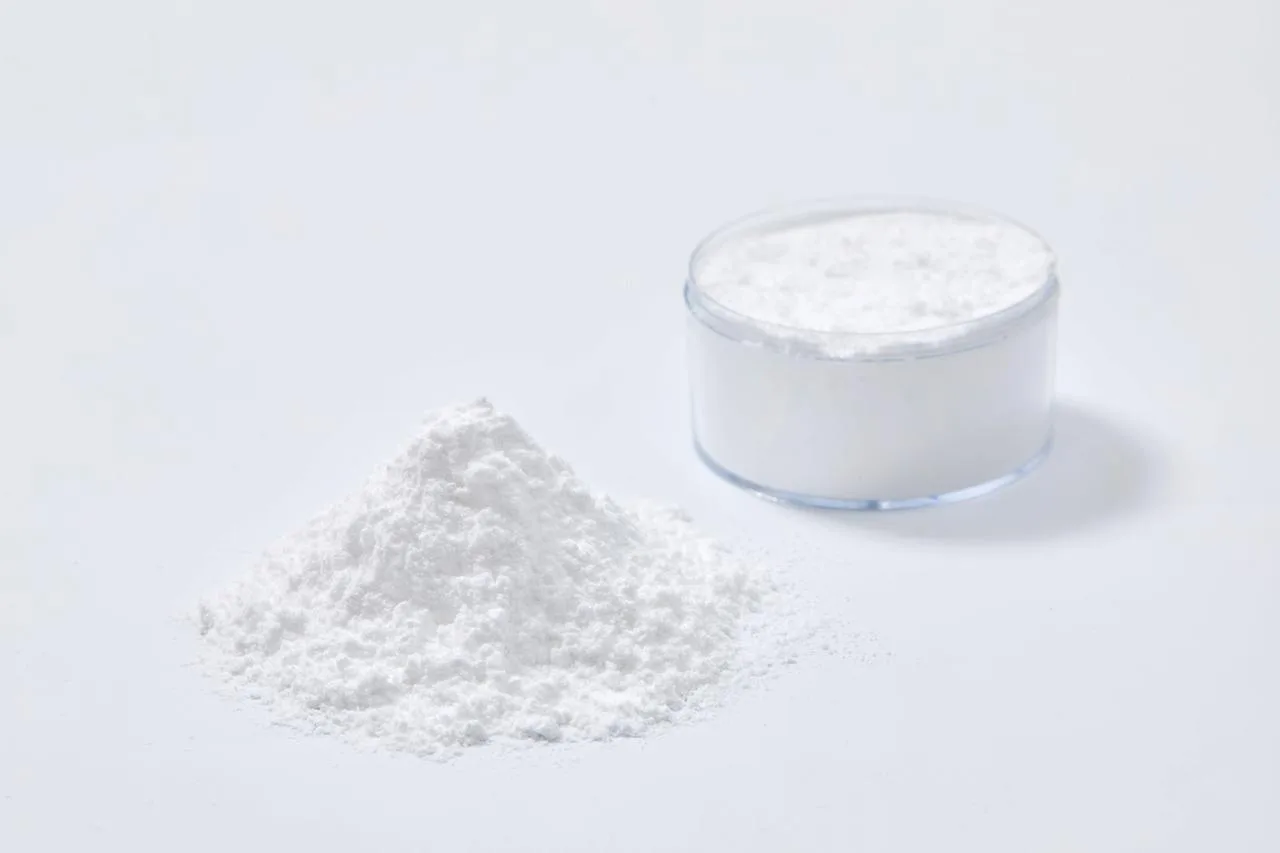
As the chemical industry continues to shift toward renewable carbon resources, bio-based platform chemicals are becoming increasingly important for the development of sustainable materials. Among these compounds, 2,5-furandicarboxylic acid (FDCA) has gained significant attention for its unique molecular structure and its role as a key building block for advanced polymer synthesis.
For anyone asking what is FDCA, the simplest answer is that it is a bio-based dicarboxylic acid produced from renewable biomass rather than fossil resources. Although FDCA is not a finished material itself, it serves as a fundamental chemical intermediate that enables the production of a new generation of bio-based polymers. Because of its renewable origin and well-defined molecular architecture, FDCA is widely recognized as one of the most promising platform chemicals in modern industrial biotechnology and green chemistry.
The Definition of FDCA
FDCA(2,5-furandicarboxylic acid) is an organic compound belonging to the family of furan derivatives and is classified as a bio-based platform chemical.
A platform chemical is a versatile intermediate that can be converted into a variety of higher-value chemical products through subsequent synthesis or polymerization. Rather than functioning as a final commercial product, platform chemicals provide the molecular foundation for manufacturing advanced materials and specialty chemicals.
FDCA is produced from renewable carbohydrate resources through chemical conversion processes, making it an important example of renewable carbon utilization. Owing to its combination of renewable origin, well-defined functionality, and compatibility with polymer synthesis, it has become one of the most extensively studied bio-based monomers for developing next-generation materials.
The Chemical Structure of FDCA
The molecular properties of FDCA are directly related to its chemical structure. Its molecular formula is C₆H₄O₅, consisting of a furan ring substituted with two carboxylic acid groups located at the 2- and 5-positions.
Two structural features are particularly important:
- Furan ring: The five-membered heterocyclic ring contains four carbon atoms and one oxygen atom. This rigid aromatic structure distinguishes FDCA from many conventional aliphatic monomers and provides a stable molecular framework for polymer synthesis.
- Two carboxylic acid groups (-COOH): Positioned symmetrically on the furan ring, these functional groups readily participate in condensation reactions with diols and other multifunctional compounds, enabling the formation of polyester and other polymer structures.
This combination of a rigid furan backbone and two reactive functional groups makes FDCA a highly effective bifunctional monomer. During step-growth polymerization, the carboxylic acid groups form covalent bonds with complementary monomers, allowing long polymer chains to be constructed while preserving the distinctive characteristics of the furan ring within the polymer backbone.
As a result, the molecular structure of FDCA provides an important chemical foundation for designing renewable polymers with well-controlled architectures and tailored material properties.
How Is FDCA Made?
Unlike many conventional chemical intermediates derived from fossil resources, FDCA is produced from renewable carbon contained in plant biomass. Modern production pathways combine chemical catalysis with biomass processing technologies to convert naturally occurring carbohydrates into a high-purity platform chemical suitable for polymer synthesis.
Although researchers continue to explore different catalytic systems and process optimizations, the overall conversion pathway follows a well-established sequence from biomass-derived sugars to FDCA.
From Renewable Biomass to FDCA
One of the most widely studied production routes for FDCA begins with carbohydrate-rich renewable biomass. Rather than relying on petroleum-derived feedstocks, this process utilizes carbon that originates from plants through natural photosynthesis.
The conversion generally involves three major stages:
- Biomass hydrolysis: Plant biomass containing cellulose, hemicellulose, or other carbohydrates is first processed to release fermentable sugars such as glucose and fructose. Depending on the feedstock, this step may involve different biomass processing methods that are used to release these sugars.
- Formation of 5-Hydroxymethylfurfural (HMF): The released sugars are subsequently dehydrated through acid-catalyzed reactions to produce 5-hydroxymethylfurfural (HMF), an important intermediate in biomass-based chemistry. HMF serves as the direct precursor for FDCA and plays a central role in the production of many renewable chemicals.
- Selective catalytic oxidation: In the final conversion step, HMF undergoes catalytic oxidation to transform its functional groups into two carboxylic acid groups, producing 2,5-furandicarboxylic acid (FDCA). Efficient catalyst design and precise reaction control are essential for achieving high product purity while minimizing the formation of by-products.
Together, these conversion steps demonstrate how renewable plant-derived carbon can be transformed into a high-value chemical building block through modern green chemistry and catalytic engineering.
Renewable Feedstocks for FDCA Production
One of the defining characteristics of FDCA production is its reliance on renewable biomass rather than finite fossil resources. Depending on the source of carbohydrates, the feedstocks used for FDCA production are generally categorized into two groups.
First-generation feedstocks primarily consist of refined sugars, including glucose, fructose, and sucrose, obtained from agricultural crops. Because these sugars can be converted efficiently into HMF, they are widely used in laboratory research and pilot-scale production.
Increasingly, however, attention is shifting toward second-generation feedstocks, which are derived from non-food lignocellulosic biomass. Typical examples include agricultural residues such as corn stover, wheat straw, rice straw, sugarcane bagasse, forestry residues, and other plant-based by-products.
These materials contain cellulose and hemicellulose that can be converted into fermentable sugars through advanced pretreatment and hydrolysis technologies before entering the same chemical conversion pathway used for FDCA production.
Compared with food-derived sugars, lignocellulosic feedstocks offer the additional advantage of utilizing agricultural residues and other underused biomass resources. Their use supports more efficient carbon utilization and aligns with the broader development of renewable, biomass-based chemical manufacturing.
Why Is FDCA Important for Bio-Based Materials?
The importance of FDCA extends beyond its renewable origin. In materials science, the value of a platform chemical is determined not only by how it is produced but also by the molecular characteristics it contributes to downstream materials. Through its unique combination of renewable carbon content, well-defined chemical functionality, and compatibility with polymer synthesis, FDCA has become a fundamental building block for the development of advanced bio-based materials.
Its significance lies in enabling scientists and engineers to design polymer systems based on renewable resources while maintaining precise control over molecular structure and material performance.
A Renewable Alternative to Fossil-Based Chemical Building Blocks
For many decades, numerous high-performance polymers have been synthesized using aromatic chemical intermediates obtained from fossil resources. As the chemical industry continues to expand the use of renewable feedstocks, increasing attention has been given to developing alternative molecular building blocks derived from biomass.
FDCA represents one of the most important advances in this transition. Produced from renewable carbohydrate resources, it introduces a bio-based aromatic structure into polymer chemistry while reducing dependence on fossil-derived carbon sources.
Unlike many renewable chemicals that are primarily used as fuels or low-value intermediates, FDCA is designed for molecular synthesis. Its bifunctional structure allows it to participate efficiently in condensation polymerization, making it suitable for producing a wide range of renewable polymer systems.
For this reason, FDCA is widely recognized as one of the key platform chemicals supporting the continued development of renewable polymer chemistry.
Enables High-Performance Bio-Based Polymers
One of the defining characteristics of FDCA is its ability to function as a highly efficient monomer for polyester synthesis. When polymerized with suitable diols, it forms furan-based polyesters that have attracted considerable attention in both academic research and industrial development.
The rigid furan ring and two reactive carboxylic acid groups provide an effective structural framework for constructing well-defined polymer chains. This molecular architecture allows polymer scientists to tailor material properties by selecting different comonomers and polymerization conditions while maintaining the renewable origin of the polymer backbone.
Among the various polymers synthesized from FDCA, polyethylene furanoate (PEF) is one of the most extensively studied examples. As research continues, FDCA is also being explored for the synthesis of additional bio-based polyesters and other polymer families, further expanding its role as a versatile renewable monomer.
Rather than serving as a finished material, FDCA functions as the molecular foundation from which a diverse range of renewable polymer systems can be developed.
Supports Sustainable Packaging Development
Although FDCA itself is not a finished material, it provides an important molecular foundation for developing bio-based polymer systems.
From a materials science perspective, the properties of a polymer are strongly influenced by the chemical structure of its constituent monomers. The rigid furan-based structure of FDCA contributes to the formation of polymer chains with well-organized molecular architectures, an important factor in the design of materials requiring controlled barrier performance.
For this reason, FDCA has become an important starting point for research into renewable high-barrier polymer systems. Rather than relying solely on conventional fossil-derived chemistry, scientists can use FDCA as a renewable molecular platform to develop new materials that combine bio-based carbon with carefully engineered polymer structures.
As biomass conversion technologies and polymer synthesis continue to advance, the role of FDCA in supporting the development of sustainable material platforms is expected to expand further, reinforcing its importance as a core building block in renewable polymer science.
The Future Potential of FDCA in Sustainable Materials
As research in renewable chemistry and industrial biotechnology continues to advance, FDCA is gaining recognition as an important bio-based platform chemical for next-generation material development.
Its renewable origin, well-defined molecular structure, and compatibility with polymer synthesis make FDCA a valuable building block for designing advanced bio-based polymers. By enabling the use of biomass-derived carbon in chemical manufacturing, FDCA provides new possibilities for developing materials based on renewable resources.
As scientists continue to improve biomass conversion technologies and explore new polymer systems, FDCA will remain an important part of the ongoing development of sustainable material solutions.